About Me

Image Map
Showing posts with label Middle School. Show all posts

How to Get Your MS and HS Students to SHOW UP for services!

Your materials are prepped for the session and you look at the clock and start the waiting game. Five minutes go by and you are getting annoyed, they're not showing up again! You weed through the mound of schedules to locate where your students may be. You wonder if you should call and disrupt the class, and decide against it so not to embarrass your students. The session is half way over by the time you get your group together. 
...If you work with middle or high school students you know this common scene all too well. 

I'm happy to share with you some tips and tricks to get your students to speech and/or special ed services during their scheduled times!

Before I provide specific tips, I want to share a few broad pointers. 

Be Mindful of Stigma: SLPs and Special Educators are considered cool to students in the younger grades. Students grab us in the classroom and ask to come to speech even when they are not on our caseload. This usually comes to a screeching halt when kids enter the pre-teen stage. Don't get offended. It's typical for students in middle and high school to not want to be seen as different. The stigma of special ed is real and we should not take it personally when our students avoid us like the plague. For more on this, check out my most popular blog post: Special Ed Stigma.  

Be Age Respectful: On the other hand, our space and expertise can extend a welcome mat for students to decompress and have fun while learning communication skills. Remember to be age respectful and empathetic to students at this critical time of development. Use materials and techniques that are trending and cool. Check out my Emoji Freebie as an example. Try using Siri during speech sessions (blog post- Get Siri-ous in Speech), bring in You Tube videos of favorite pastimes, and try Pixar clips for inferencing. I promise, you'll see increased motivation and participation. 

Ask Your Students: From special ed stigma to deficits in executive functioning skills, there are many reasons why students don't show up for services. Ask your students why they aren't showing up. Try this approach, "Hey Johnny, I've noticed you have trouble getting to your speech session on time, what's up?" We SLPs love to talk, but keep it quiet. The gift of the pause is golden. You may be surprised by your students' responses. 

Educate Your Students: Do your students understand themselves as learners and know why they come to work with you? Educate them on their strengths and weaknesses and help them to see why this work is important for their future. My IEP and Me product may help your students take ownership of their learning and increase attendance. 

Now to some of the more specific tips and tricks. 

1. Pass it on: Many SLPs and special educators use appointment cards for students. Once again, make it age respectful. Include service time, teacher name, and location, but leave out the cutsie pictures. You could also develop a hall pass for teacher classrooms. Students simply bring the pass with them when they transition to your service location. 

2. Classify it: Our local high school has the special ed services as an actual elective class called study skills. Students receive credit for their specialized instruction and it's built into the schedule. I really wish we had this model at the middle level, but there is no reason we can't write our service times onto our students' academic paper schedules. Students reference their schedules daily. You may also make a copy of this schedule in a reduced size for students to tape into their lockers. Write speech in the schedule as an actual class. Call it Communication Skills- ain't it the truth? 

3. Make it Natural: Okay, I know that scheduling is the hardest part of our jobs, but think about how awkward it feels to leave, say, in the middle of a meeting. Imagine being a middle school student and having to leave smack dab in the middle of math class and then having to return 10 minutes before the class is over. I let students have some input into when they would like to come see me. Try to make the service start or end time during a transition or when the student doesn't mind leaving his/her classroom. 

4. Technology Time- Do your students have a 1:1 laptop program, iPads, or are they allowed to use their iPhones in school? These are some favorite tech tips that give students more independence while using reminder alarms. There are a lot of favorite apps for reminding and Remind App or Remind 101 are on top of the list. You may also set up reoccurring emails for students. Use Mail Conductor and input your information only once. Students can use Google Calendars to input their schedules as well. Have your students bring their technology to their session and spend a few minutes setting up reminder alarms. They may even teach you something. 

5. Code the Call- I call the classroom as a last resort, which may be your best option for some students with severe organizational challenges. Set up a code system with the teacher and student. I let the phone ring once and the student and teacher know that it's my specialized instruction time. Your success will increase when you have more people involved in remembering service times. 

It's taken me years to get a steady flow of students arriving to speech and language services on time. I hope these tips and tricks are useful and that you see a huge improvement in attendance this year. 

You may also like my FREE Incentive Punch Cards for Attendance and to reduce tardiness. 

Inferencing & Vocabulary Bundle Complete! Upper Grades

The much-anticipated 
My middle school students,  especially my hard-to-engage boys,  LOVE this 
Adventure Series! 
Thanks for all of the encouraging words and wonderful reviews.
 I read and appreciate them all! 

Figurative Language Giveaway!

Phew, it took an entire year to complete my Figurative Language Bundle and you now have a chance to win it in this bundle giveaway!
3 lucky winners will get the entire Figurative Language Bundle!  

This is a great resource to use throughout the entire school year to incorporate figurative language into your 3rd - 5th general ed classrooms or to use for middle school age students who struggle with these higher level language skills. 

Each season includes:  figurative language definitions, idiom cards, idiom card covers, simile and metaphor activity, personification identification, personification creation, multiple meaning match, multiple meaning story, black/white printables, idiom data tracking form, simile and metaphor data tracking form page, personification data tracking form, multiple meaning data tracking form page, figurative language rubric


Figurative language is an important piece of addressing the Common Core Standards as it requires students to use critical thinking skills not only used in the classroom but in everyday life.  

Here is a preview of my new summer figurative language product.  Each month includes the same format of pages and data forms to make seasonal tracking and progress monitoring a breeze.
Win the ENTIRE BUNDLE by entering below.  Three lucky winners be chosen!

a Rafflecopter giveaway

Siri-ous results in speech.

As most of you know, I primarily work with middle school students.  This year's caseload surprisingly consists of many students with speech challenges including apraxia of speech, fluency, and articulation   I find it hard to find materials for this age range.  My students have had years of speech services and, not surprisingly, speech therapy is not their favorite part of the day.  My goal this year is to make their service time fun and functional and my most recent idea of using speech recognition technology has been a huge hit.   
Some of my students have iPhones and I'm lucky enough to have an iPad with Siri.  Siri is a voice to text application for Apple products.  There are other voice recognition apps such as Android Voice. The recognition technology is pretty amazing and improving daily. 

Students must be intelligible for Siri to respond appropriately to the request.   The motivation is huge as students drive the search with their interests.  I ask students to share their interests, hobbies, favorite tv shows/music, etc., and Siri does the search for information.  For example, I have a Mine Craft obsessed 5th grader who is constantly searching for tricks of the game.  My 7th grader loves basketball and enjoys reviewing game stats.  This avenue gives students immediate feedback and they are very careful to use their strategies to improve intelligibility. 

The SLP may also drive more language-based searches by asking students calendar related questions or making inquiries about general knowledge, community places, and even asking "how-to" questions for sequencing.   Other functions are available too.  Students may text the teacher, check/input into their calendar, and set the alarm clock.  The service options are endless as is the fun and motivation.  

I would love to hear how you plan to use Siri with your students.  


 You may also like these products related to speech and technology.  

Everyday tools for increasing expression.

I love to incorporate fun hands-on activities into my service time with students.  This is tricky at the middle level, but there are usually creative ways to approach descriptive language with materials that are cheap and easy to find.  

Smelly Markers! 
 I could just eat the orange marker with its tangy candy smell.  These great tangibles are a fun tool to work on describing.  At level one, I have students get creative with naming the color (below).  Students provide a descriptive statement of the marker's scent for Level two (above).   


Paint Swatches:  
From fresh cut grass to sage leaves, your students will love acting as painting color pros.  Students can name the color and expand expressive language by describing the color in oral and written forms.  


See how your students can become jelly bean connoisseurs on my
 Tasty Expression post.   

Use these ideas for data points throughout the year!  

Now tell me: What's your favorite color, scent, or flavor?  

You may also like my new Expanding Expression Tool Companion Bundle pack.  A year of describing activities with data tracking forms.  

Thought bubbles freebies!

I have loved using thought bubbles the last couple of months.  I'm not sure why I didn't incorporate these into my social language therapy sooner.  If you're in the same boat, have no fear and read on.  

Have you ever heard of Chogger?   
You must check out this amazing website which allows you and your students to create comics by adding thought and speech bubbles to your pictures.  My sixth graders are currently working with this website and having a blast.  It targets a wide range of meta-cognitive skills as well as social language and syntax.  

 Next up is my little gift to you for Teacher Appreciation and Better Speech and Hearing Month. 

Head on over to my store for my new Thought Bubbles Freebie.  You and your students are sure to get many laughs out of this product.


Here's some more great news! 
The TPT last sale of the school year is going on May 6-7!!! 
 My entire store is 20% off including already reduced bundles! Use the code TPTXO  to get an extra 10% off!  

You may also like:  


Finding Your TPT Niche


Thanks Teach Speech 365 for throwing this linky party which highlights SLP bloggers interests and areas of speciality.  

I started teacherspayteachers a year ago this month.  My work is primarily with grades 5-8 and also with my school's Life Skills population which may span grades 3-8.  Most of my products are geared towards services with the middle school student and life skills populations.  

Calendar activities: All of our students follow a schedule and have to understand calendars.  It is amazing how many language skills are involved in calendar work: from understanding concepts to sequencing events I realized that a lot of goals could be incorporated into the functional skills of calendar work.  These monthly activities are labor intensive, however, it is worth the effort as I receive great feedback from my buyers and have begun to see major improvements in the skills addressed.  I almost have a year of calendars made and will update these calendars yearly for no fee.  This summer I plan on adding data pages to each month.  

Perspective Taking: I recently traveled to Michelle Garcia Winner's  Social Thinking Clinic in  San Jose to participate in the Social Thinking Mentor Training Program.  I was able to observe Michelle working with adolescent groups of learners with social needs and talk with her about her passion for working with this age group.  This opened up my learning to a world outside of "pragmatic" language and sparked my interest in developing products that address the important areas of safety, problem solving, empathy training, and perspective taking.  Here are a few of my best sellers:  
  
Taking Perspective: Problem solving, empathy training, and perspective taking with situation cards and an emotion bank.
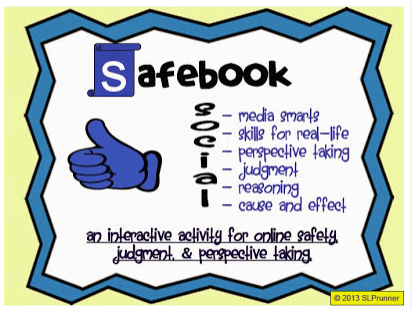
Safebook: Perspective taking and problem solving with social media.  


Figurative Language: I love making these products because idioms and multiple meaning words are so much fun to work with.   I have a spring, summer, and holiday themed figurative language products.  Fall and winter are in the works.  


My new Spring Figurative Language product has multiple meaning words, idioms, personification, similes, and metaphors.  It includes at least two activities for each area as well as black/white printables for easy prep.  Data tracking forms are included for baseline and progress charting.  


Describing and EET Companions: I received a grant last year and was lucky enough to be able to purchase the entire EET system and most of the extras.   The skill of describing is so important in all modes of expressive language and I've made all my activities of descriptive language easily able to be used with Sara Smith's EET.   

Dazzling Daisies comes with bulletin board daisies, printable daisies, cueing daisies, and describing data may be collected in oral and written forms.  


Language Logic: When I worked in the rehab setting I used language logic puzzles to improve critical thinking skills in my CVA and TBI patients.  Language logic activities are hard to come by for the school age population so I made some for my students and decided to sell them on TPT.  I absolutely love working on goals of critical thinking, problem solving, deductive, and inductive reasoning using these activities.  

Sentence Scrambles:  For some reason, most of my middle school students have a really hard time with the Sentence Assembly.  They present with long delays on standardized SLP tests and would have benefited from cues if they were allowable.  I made a variety of sentence scramble products to target this specific skill and have provided a cueing system in these products.  This is one area in which I have student work samples and evidence of improved ability (sometimes hard to find concrete data in our field).  I just tested a student for her triennial and she's moved up two scaled scores in this area!


 My Spring Sentence Scramble has been one of my go-to tasks.  They are so easy to pull off the shelf and work with groups of students.  You may use the writing paper (included) or have students use dry erase boards to sequence their sentences.  When they are finished, students just pass their scrambled sentence on to the next person in the group.  This gives me the opportunity to individually check-in with students, provide cues (cueing system included), and chart data.  

These are the primary areas in which I have multiple products in my store.   Thanks for hanging out with me and make sure to go back to Teach Speech 365 for more from your favorite TPT authors.

Get up and Move Giveaway!


Welcome to my first Blog Giveaway!

Brain research shows that learning is enhanced when we move. Our kinesthetic mode of learning is stimulated as well as our circulation, attention, and the release of endorphins (you know the happy hormone).  

Here's a few simple ways that I incorporate basic movement into my work with students:

Expressive Language-Students pass a ball or beanbag back and forth for activities of naming, turn taking, and sentence recall.  

Following Directions-  I often ask students to get up and perform physical activities for following directions.  I may ask the student to stand up, do 10 jumping jacks, open the window, and stretch to the sky.  

Memory Strategies- I teach my middle schoolers mnemonics paired with body movement and visuals.  i.e. the memory peg for one is "sun" in which the student needs to stand up and make the physical outline of the sun with his/her arms while pairing it with the memory item (more to come on this in a later blog post).  

I've collected some great products to get our kids up and moving in speech and language therapy.   Enter below to win them all!  


1.   Carissa from homesweetspeechroom has generously donated Fast Dash, an awesome product for targeting those early sounds.  I know my kids will love playing this one! 


2.  You could win Speech-a-Saurus ' adorable phonemic activities which incorporate movement.  This Sound Bundle can also be used for articulation and following directions.  
                                

3 & 4.   My thoughtful friend Rose over at Speech Snacks was so kind to donate two products that focus on fitness.   First is The Healthy Heart and Language Mart, a fact-filled language product for middle and high school students to build awareness of fitness, health, and nutrition.   And how can you not smile at these adorable Fruits and Veggies that teach language and listening skills to the younger grades.  


5.  Pam from chitchatandsmalltalk (great, active blog to follow) had a fun idea with her Balloon Bop game.  You'll have a chance to win this activity that will not only get your students up and moving but fill the room with laughter during your therapy sessions.  


6.  Laura from All y' All Need is such a great person whom I had the pleasure of getting to know.  Enter for your chance to win Write and Say the Room.  This new, spring-themed, colorful product brings kids on a scavenger hunt throughout your room or beyond.   


7.   This is one of my first products that you may win in the giveaway bundle.  Just as it sounds, Hopscotch Naming is played while students work on word-finding and expressive naming skills.  Three levels are provided for differentiated instruction. 


Good luck everybody and have fun moving with your students!


                                                          a Rafflecopter giveaway

Tie Dye Language!

Let me give you the skinny on my new far out product!


Tie Dye Language is jam-packed with 8 activities in the areas of idioms, inferencing, similes/metaphors, multiple meaning words, and identifying emotions. + Data Progress Charts for each activity.  
Middle and Upper Grade Language Activies!

Mulitple Meaning Words: Students identify two meanings of sixties themed slang/multiple meaning words and create a story (not shown) with the vocabulary words. 


Mood Ring Match: The students read/listen to sentences and use the mood ring color chart to identify which person is wearing what color ring. 


Inferencing: "I Have…Who Has?"(28 cards) is a super fun game of using those higher level language. 
Color Idioms- A rainbow of colors in these idioms (48 total).


Similes or Metaphor?  - This activity (2 pages) has students using definition page (not shown) to identify if the sentence contains a simile or a metaphor.  In addition, student needs to underline the figurative language.  
These are just a few of the many colorful activities you'll find it here:Tie Dye Language. 

Also included are Data Points for each activity!  

Easily document student progress!
Baseline + at least 2 data points per activity.  

See full size example below. 
Thanks and: